Heartwood: What the Andes Taught Me
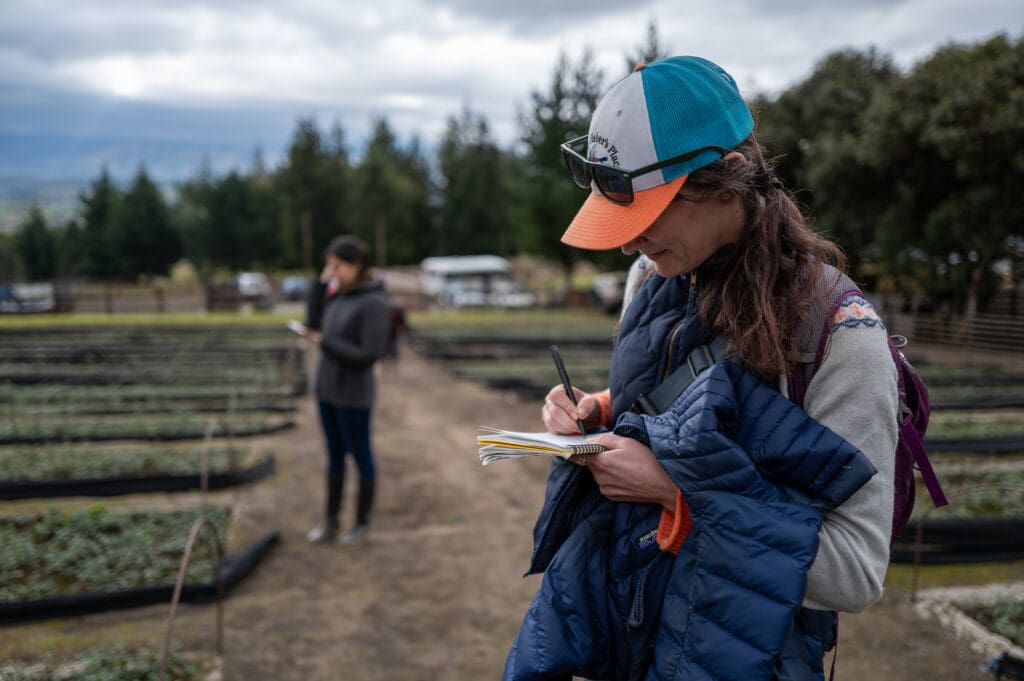
By Abby P. Metzger, Communications Director
I have never had an onboarding experience like Global Forest Generation. A little more than a week after starting as the Communications Director, our restoration initiative, Acción Andina, was named a finalist for The Earthshot Prize, a global environmental award spearheaded by Prince William. We were among 15 finalists selected from more than 1,000 submissions worldwide. I spent my first days meeting communicators across the Acción Andina network and drafting media kits and announcement plans.
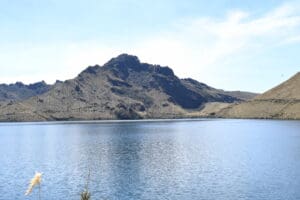
Six weeks later I boarded a plane to Ecuador to meet colleagues and learn more about the native Polylepis forests of the Andes (you can read about that experience here). Six weeks after that, Acción Andina won the 2023 Earthshot Prize in the Protect and Restore Nature category. Soon after, the United Nations named it one of the world’s most effective restoration efforts—a World Restoration Flagship. It was quite a way to start a job.
Over time, I grew into the role of chief storyteller, helping shape how this work is understood beyond the Andes. I developed campaigns, pitches, decks, partner stories, newsletters, reports, and social media plans. While there is much more to do, I was proud to have set a new standard for our Annual Report, overhauled our website, and defined our brand—and not just how we look but our voice. I also helped establish our Visionary Council, a group of amazing leaders and thinkers who help guide our future efforts. In parallel, I worked hard on my Spanish to communicate better with my Acción Andina colleagues. This involved taking classes, listening to Spanish radio, doing workbooks, and finding conversation partners to get over my fear of speaking.
Alongside my language learning, I discovered so much about Andean ecosystems: how Polylepis forests withstand the harsh conditions of the Andes, or how their branches comb the sky for fog and help replenish watersheds far downstream. I also learned how woefully underfunded ecosystem restoration remains across Latin America, and how urgently the Andes need more hands, and more storytellers, to carry this work to audiences far beyond the mountains themselves.
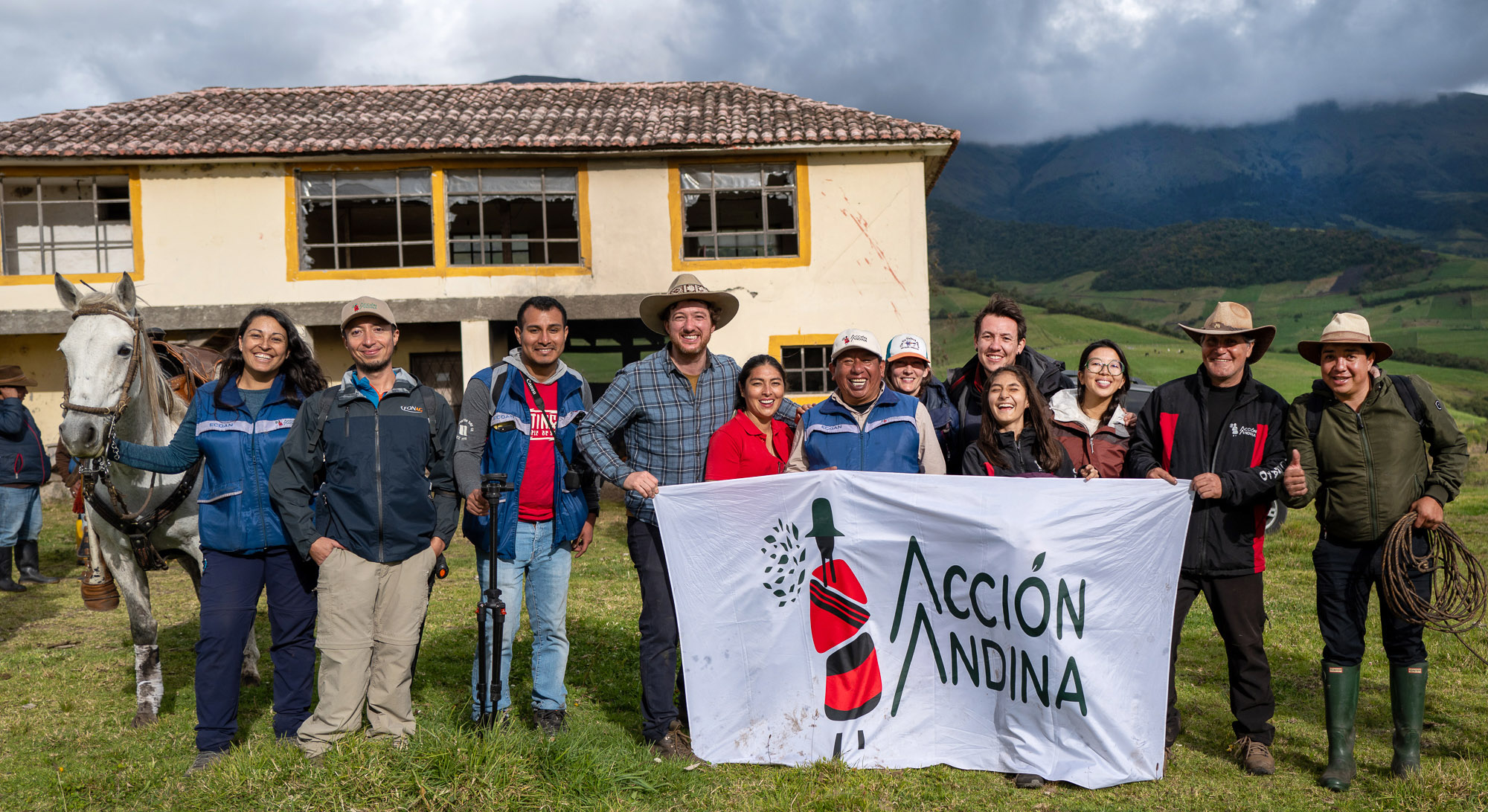
Of course, the highlight has been working alongside my GFG and Acción Andina colleagues. Florent Kaiser, the CEO and my boss, understood instinctively that stories move people in ways data alone cannot. He pushed us to make something worth remembering. GFG Co-founder Leslie Danoff was always there to provide feedback, whether on a thought piece for the World Economic Forum, or a wacky idea to create a video game about planting Polylepis trees in the Andes.
So many moments now live with me. I will never forget watching Acción Andina President Constantino Aucca Chutas talk with local communities in Ecuador about the importance of Polylepis trees for water. He spoke with such warmth and clarity. Faces around the circle were completely still, listening.
Throughout it all, my one employee, Isabella Orgel, was ready to try anything new, a very important mindset when working for a young conservation organization. Whenever I felt overwhelmed—on a tight deadline, or discovering an 11th-hour typo in subtitles that meant re-rendering a video from scratch—my communications counterpart in Peru, Jean Pierre Salguero, would say: Don’t worry, be happy. Somehow the breezy ballad of Bobby McFerrin became my favorite mantra.
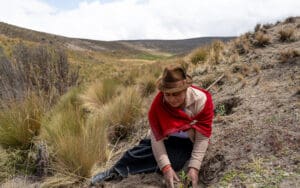
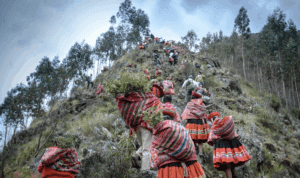
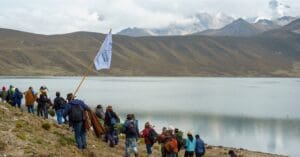
But the heartwood of my time here has been learning from and elevating the voices of local people who are witnessing the rapid retreat of ancient glaciers and forests. The perseverance of communities coming together across generations to protect forests and water will forever inspire me. I can still picture a small boy in a bright green shirt in Ecuador during a reforestation campaign, holding a bundle of Polylepis seedlings, ready to plant them. That image carries its own kind of instruction.
I cannot begin to understand the full depth of Andean communities and their relationship to their land. But I did learn one lasting lesson: sometimes the old is innovative. Practices like the ancient Incan principles of Ayni and Minka—reciprocity and working together for the common good—need no reinvention. It reminds me of the dragonfly, which has remained virtually unchanged since the time of the dinosaurs. Timeless designs, like timeless practices, endure.
Leaving something is hard. Especially when it’s a good thing. I made the difficult decision to return to science and research communications at a university—to work in my own time zone and to have more energy for two boys and their basketball tournaments, piano recitals, soccer games, and Spanish homework. But we never really leave an experience, do we? Long after I close my laptop at Global Forest Generation for the last time, I will carry the memory of passionate people building systems, telling stories, raising funds, and celebrating the magic of the Andes.
Stories stay with us. And life is not really a timeline. It’s a quilt, as my mother would say—moments and experiences stitched together to tell the story of who we become. GFG and Acción Andina now occupy a generous corner of mine: blue like glacier ice, burnt orange like Polylepis bark, the deep leather green of wind-swept leaves, and some indescribable color belonging only to the people who have lived and loved in the Andes since time immemorial.