Community Insights: Building Resilience in the High Andes in the Face of El Niño
Explore how Acción Andina partners at Conservación Amazónica (ACCA) are leading restoration and community engagement to prepare for the impacts of El Niño in Peru.
The World Meteorological Organization warns that this year’s El Niño is strengthening rapidly and could be one of the strongest on record.
As El Niño reaches its peak, extreme weather, extended droughts, and rapid flooding events across South America threaten local agriculture, water supplies, and the health of entire ecosystems, further complicating restoration efforts. We’ve already explored what that means for the Andes. This time, we hear directly from Acción Andina partners on the front lines.
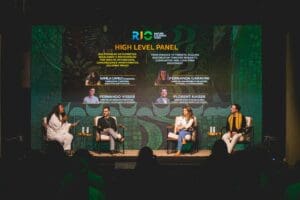
Last month, two conservation leaders from Acción Andina partner Conservación Amazónica (ACCA) joined GFG’s update call to share recent field insights, including how this year’s El Niño weather patterns are impacting them on the ground. Marlene Mamani is a Peruvian biologist and Andean Restoration and Community Relations Specialist, and Ruthmery Pillco Huarcaya is the Science Manager at the Wayqecha Biological Station. Both Marlene and Ruthmery are recognized as National Geographic Explorers for their work in the high Andes.
Moderated by GFG CEO Florent Kaiser, the conversation addressed the actions local communities in the high Andes are taking to prepare for the heightened risks associated with El Niño.
How El Niño Is Reaching the Cloud Forest
El Niño is hitting hard in Peru right now, and its effects ripple across the whole landscape. The Andes are connected to the Amazon through water and soil, and the health of Andean forests influences the Amazon River and the rainforest below. Marlene showed us in her presentation how this works. High mountain forests, known as cloud forests, are wrapped in a constant layer of clouds and mist. They act as a sponge, absorbing moisture and slowly releasing it down to the lowlands. As El Niño brings drier weather to parts of the region, that moisture is disappearing.
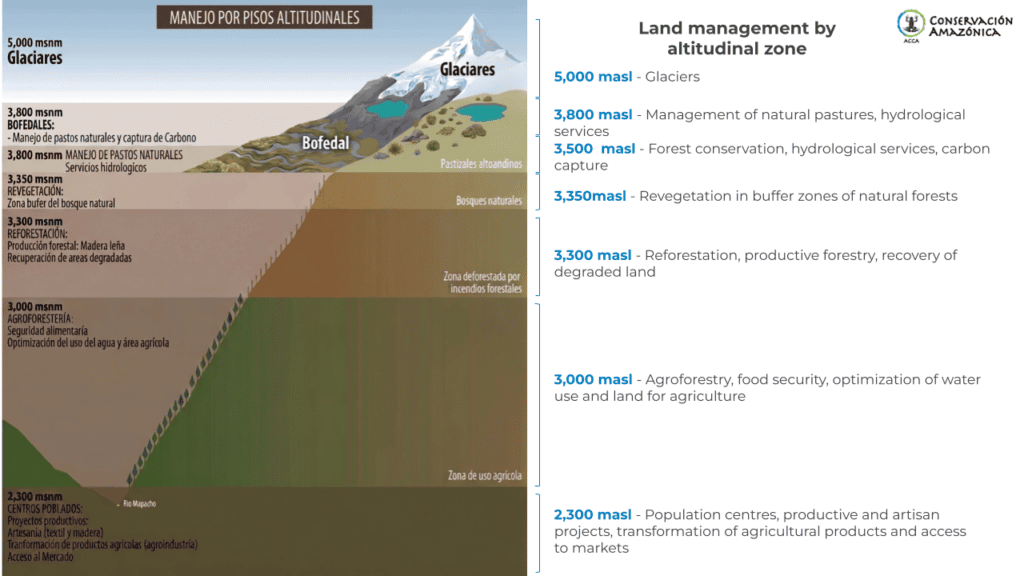
The cloud forest is one of the most important habitats for Andean bears (also known as spectacled bears), the only bear native to South America. They live everywhere from the lowland forest to over 4,000 meters, where the glaciers are, moving up and down through the cloud forest and grasslands to find food. As the forest dries out, Ruthmery is seeing key bear foods like bromeliads decline, and trees are fruiting late or not at all. Bears are moving closer to villages in search of food, which leads to more conflict with people. Her research shows bears travel well beyond protected areas. One bear moved through Manu National Park, a regional conservation area, and about five communities. Connected corridors give bears and other species safe routes to find food and move uphill as the climate changes, which helps reduce that conflict.
How Acción Andina Is Responding
Acción Andina recently held an emergency meeting with over 30 directors leading local partner organizations in five countries. The goal was to describe El Niño’s impacts, discuss coping strategies, and share lessons learned. The strongest response from directors was about fire prevention. Florent summarized the questions they are asking:
How do we structure a program that runs across the entire Andes and faces an increasing threat that’s not going to go away? How can we invest long-term in fire prevention, and how can we partner with the communities to really understand the ecological dynamics?
In the cloud forests where ACCA works, the land is getting drier. Ruthmery described cloud forest moss that once dripped with water when you touched it. Now it feels like paper and can catch fire very quickly.
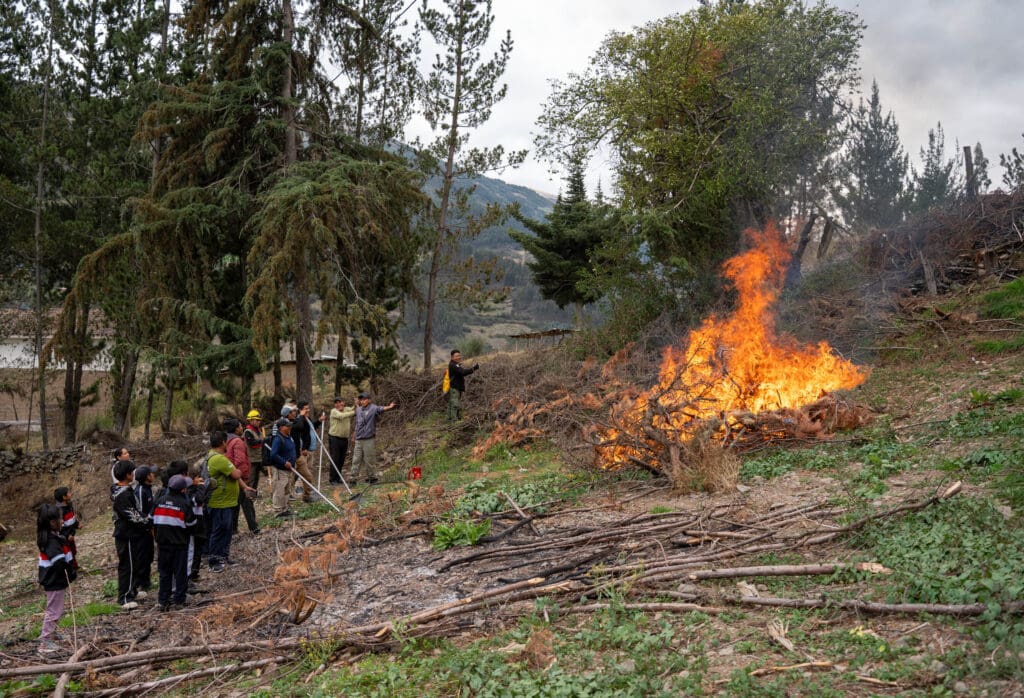
Acción Andina’s local partners are already equipping and training community-led fire brigades. Building on this work, Acción Andina is implementing a long-term fire prevention program. It will need international support to prepare for the heightened fire risk under El Niño and protect both communities and ecosystems from its devastating impacts. Local leaders are ready to take action to protect their forests and communities, and our role at GFG is to support them. That means bringing together local communities, regional and local governments, funders, and scientists to build a fire prevention response for this El Niño season.
At Global Forest Generation, we support Acción Andina by connecting the people working to bring life back to the Andes. As a co-founder, we helped build Acción Andina to prioritize implementation and concrete action, with science guiding that work. This approach is shaping our response as we face El Niño.