Premios Verdes: An Open Letter on Ayni, Minka, and the Power of Collective Action
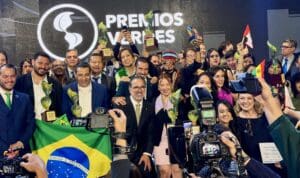
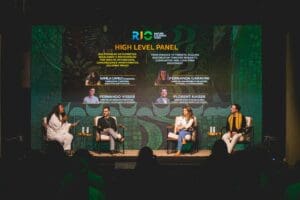
Gustavo Manrique, president and co-founder of Premios Verdes, recently invited me to join its International Advisory Board for 2026–2028. This is my answer.

Dear Gustavo,
Most invitations I answer privately. Your invitation to join the International Advisory Board of Premios Verdes is one I wish to answer publicly, because what you and your team have built deserves to be celebrated, and because I believe the next chapter of your journey represents an extraordinary opportunity for Latin America.
You share a conviction I hold deeply: when we unite around a common purpose, good ideas can become real, lasting change. I am grateful for your invitation, and genuinely excited about what we might achieve together.
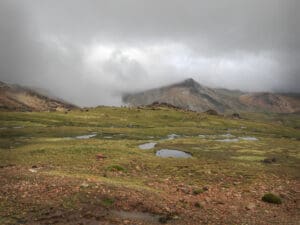
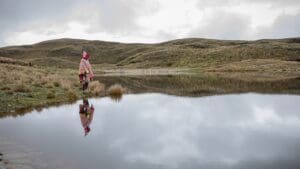
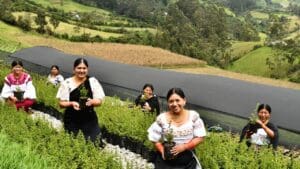
Much of what I believe about collective action, I learned in the Andes. High in the mountains, communities have practiced something extraordinary for centuries. When irrigation canals need cleaning, forests need restoring, or a family needs help building a home, people come together to contribute their time, knowledge, and labor. This is minka, the Andean tradition of collective work for the common good. At its heart lies ayni, the principle of reciprocity, which reminds us that what we receive, we have a responsibility to give back.
These are more than traditions. They represent a way of relating to one another and to nature that I deeply believe in, and one that I think offers important lessons for confronting the environmental challenges of our time. Restoring nature is not simply a technical challenge. It is also about rebuilding our sense of belonging, responsibility, and connection to the living world.
Through Acción Andina, I have had the privilege of seeing these principles in action. What began as an effort to restore threatened Andean forests has grown into one of South America’s largest community-led restoration movements, spanning six countries and bringing together hundreds of communities, local organizations, scientists, governments, and funders. Together, we have planted more than 15 million native trees and restored thousands of hectares of forests.
The greatest lesson for me is that lasting restoration cannot be achieved by any one organization or donor. It grows when communities lead, when partners contribute what they can, and when caring for nature becomes part of a shared identity and purpose. This is the spirit of ayni and minka, and it is the same spirit I recognize in Premios Verdes.
What inspires me every day living in Latin America is the extraordinary wealth of its cultures and its nature, and how deeply the two are woven together. Culture may be our most valuable underlying asset: the traditions, music, food, languages, and ways of life that bring people together to celebrate our shared humanity and our belonging to a place. Protecting culture and protecting nature must go hand in hand. In fact, I believe doing both together is our best bet to get this right, because people protect what they love, and they love what is part of who they are.
Over eleven editions, Premios Verdes has built a remarkable community of changemakers who embody this. Across Latin America and the Caribbean, entrepreneurs, scientists, Indigenous communities, and local organizations are already restoring forests, protecting biodiversity, transforming food systems, and finding new ways for people and nature to thrive together. Many of these solutions emerge from communities with generations of knowledge, cultural identity, and a deep responsibility for their territories.
Yet the challenges we face are just as extraordinary. Illegal mining is tearing through the Amazon, poisoning rivers and the communities that depend on them, while large-scale pollution degrades our rivers, oceans, and public spaces. Forests, glaciers, and the water sources that sustain millions of people are under growing pressure, and every mine, brewery, hydropower plant, agricultural producer, and city depends on those same healthy watersheds. Ayni would invite them to give back to the natural systems that sustain them; minka would bring entire industries together to restore what they share. Latin America does not lack solutions or extraordinary people willing to make them happen. What we lack are the partnerships, financing, and collective ambition to take these solutions to the scale these challenges demand.
This is where I believe Premios Verdes has an extraordinary opportunity: connecting people, ideas, and resources so that individual efforts can grow into collective movements capable of transforming entire landscapes and regions.
So I find myself asking: what if we practiced ayni and minka at the scale of a continent? Imagine bringing together 500 of Latin America’s largest and most committed companies to spearhead this effort, contributing their leadership, resources, innovation, and technology to tackle these challenges alongside communities, governments, scientists, and philanthropists. That would be ayni and minka at continental scale: giving back to the ecosystems and communities that sustain their businesses, and working together on problems no single company, government, or organization could ever solve alone.
The solutions already exist, including among the changemakers Premios Verdes celebrates. I believe Latin America has an extraordinary opportunity to show the world how ancestral wisdom, cultural richness, modern science, technology, and collective ingenuity can come together to restore nature and inspire a global movement.
You have spoken of a new chapter for Premios Verdes, focused on expanding its international presence, strengthening alliances, and supporting the initiatives transforming our region. To me, this is the shift that matters most: from recognizing changemakers to building movements. My hope is that Premios Verdes can become an even stronger platform for connecting these changemakers with the people, capital, and institutions needed to take their solutions to scale.
What I have learned through Acción Andina is that building movements is about much more than scaling projects. It is about creating a shared purpose that people identify with, take ownership of, and carry forward for generations. I believe this is how lasting change happens, and it is what I hope to contribute through my experience with Global Forest Generation and Acción Andina, while learning from the extraordinary people and initiatives that make up the Premios Verdes community.
In the Andes, when communities finish a day of minka, they often gather to share a meal and celebrate. Everyone has contributed something, everyone has a place at the table, and the work belongs to the community. I love the wisdom of this tradition, which reminds us that the greatest things we accomplish are rarely ours alone, and that protecting what we love is also a reason to celebrate it together.
Gustavo, thank you for inviting me to this table. I look forward to working alongside you, the Premios Verdes team, and the Board to help build a movement that brings together Latin America’s cultures, wisdom, ingenuity, resources, and collective will to restore the natural world.
With gratitude and excitement,
Florent Kaiser
CEO, Global Forest Generation
Co-founder, Acción Andina